For detailed description of parameters see the Data Methods part of this website
Haemoglobin: 14.1
White blood cells: 5.19
Platelets: 246
Neutrophils: 298
All in normal range.
Everything a bit uppish.
For detailed description of parameters see the Data Methods part of this website
Haemoglobin: 14.1
White blood cells: 5.19
Platelets: 246
Neutrophils: 298
All in normal range.
Everything a bit uppish.
Into the second week of March, and I’ve only just found time to write up February’s summary; which tells us something.
We had the bone marrow and bence jones tests back. Nothing in the bone marrow, no detectable paraprotein levels and no bence jones proteins. My illness only seems detectable in the damage it’s doing to my bone structure through MRI scans.
I’ve been very, very busy at work. I was advised that it was likely that I wouldn’t be able to work through this first period of treatment but I struck lucky (mostly) with the kickback from side effects. I got tired in the afternoons but and had a bit of nausea throughout the month but that’s about it. If anything I worked too hard, took too much on, increased my workload. My inner amateur psychologist suggests this was an attempt to prove to myself and colleagues that nothing is wrong, this is possibly right but I can’t say I’ve been consciously avoiding my illness. Coping mechanisms are complex things though.
Lets look at the data:
I’ve made a decision to keep cumulative graphs of my medical data but not bother with monthly. It makes sense to ascertain long-term trends with important information like this. For the affect data, I’m going to do both monthly and long term with the monthly summaries as percentages. Here we go
Affect analysis
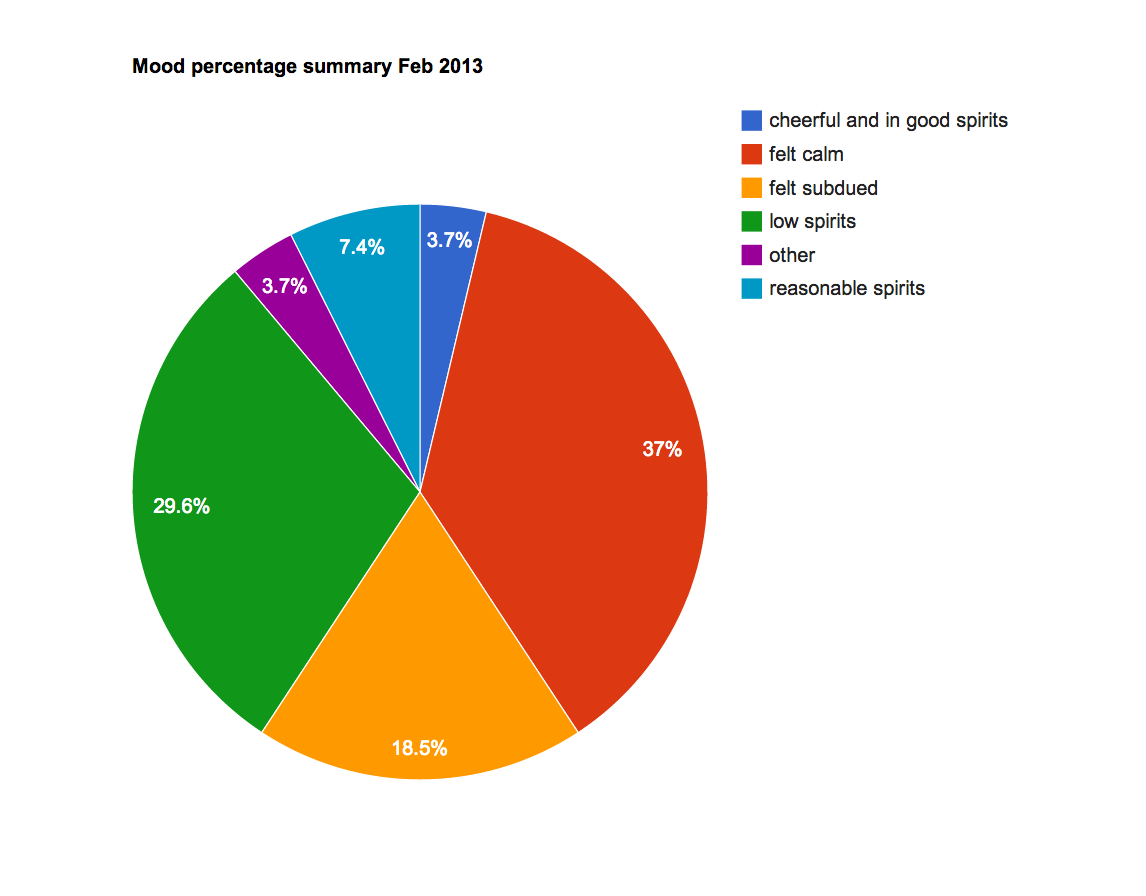
Mood (top image): highest of 8 (cheerful and in good spirits) and a low of 4 (low spirits).
Looking at the percentages the 4 (low spirits) swamps the highs this month by a whopping 29% compared to 3.7%. Most of the time, i.e. 37% I felt calm. I’m quite surprised at how often I did feel in ‘low spirits’; I was also subdued 18.5 % of the time. I thought I’d been coping better than that, but I suppose it’s not surprising when you’ve been told you’ve got incurable cancer. I also think that the amount of work I had on is telling, it takes me away from the creative activity of the type which makes me happy.
Stoicism: a high of 9 (illness what illness) and a low of 3 (wobbly lip)
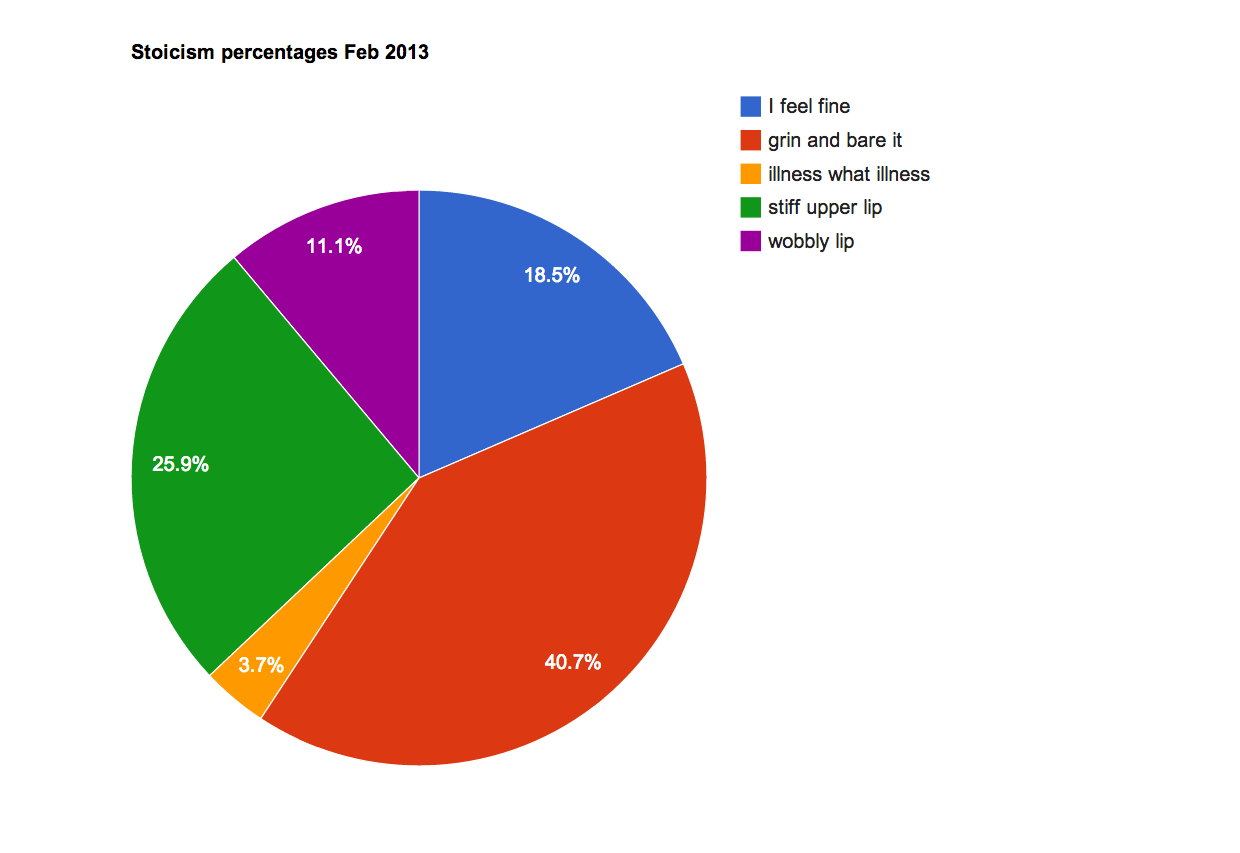
The percentages breakdown are interesting compared to mood and suggest that while my feelings about things are affected, my resilience or ability to cope is good. 40% of the time I’m happy to grin and bare it, 18.5% of the time ‘I feel fine’. 26% of the time I stiffen my lip in the grand British manner. Of course all sorts of constructions can be made about this, including that I suffer a complete inability to face my plight. I prefer to think I’m good at coping and a stubborn bugger though.
Control A high of 7-8 (a good deal of) and a low of 1- 2 (no control),\ both are outliers though with only 3.57%.
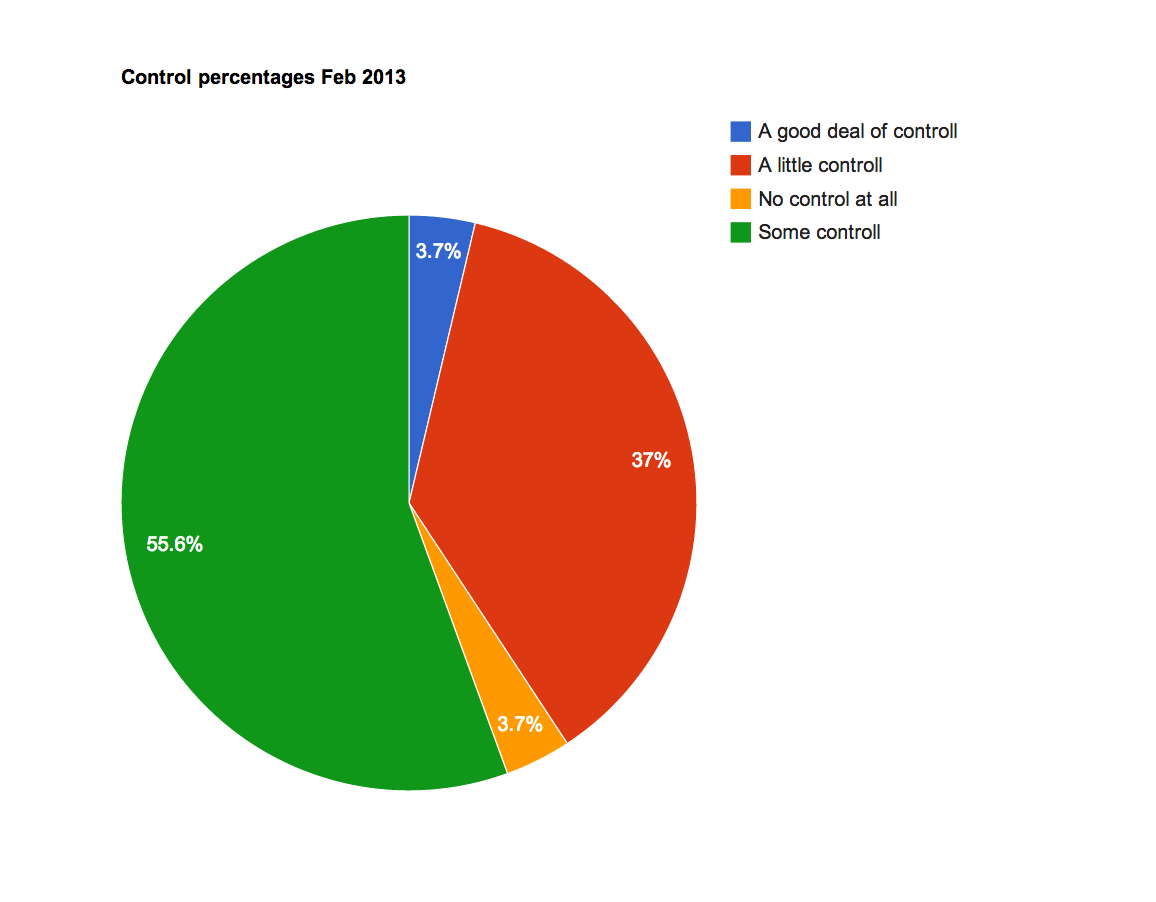
The majority of the time I felt ‘some control’ at 53.57% or at least ‘a little’ at 35.7%. These figures do seem to reflect the stoicism index and I draw similar conclusions. Dips and highs reflect times when I’m more creative, overburdened with work, or as is the case here, misinterpreted a medical analysis.
Hats
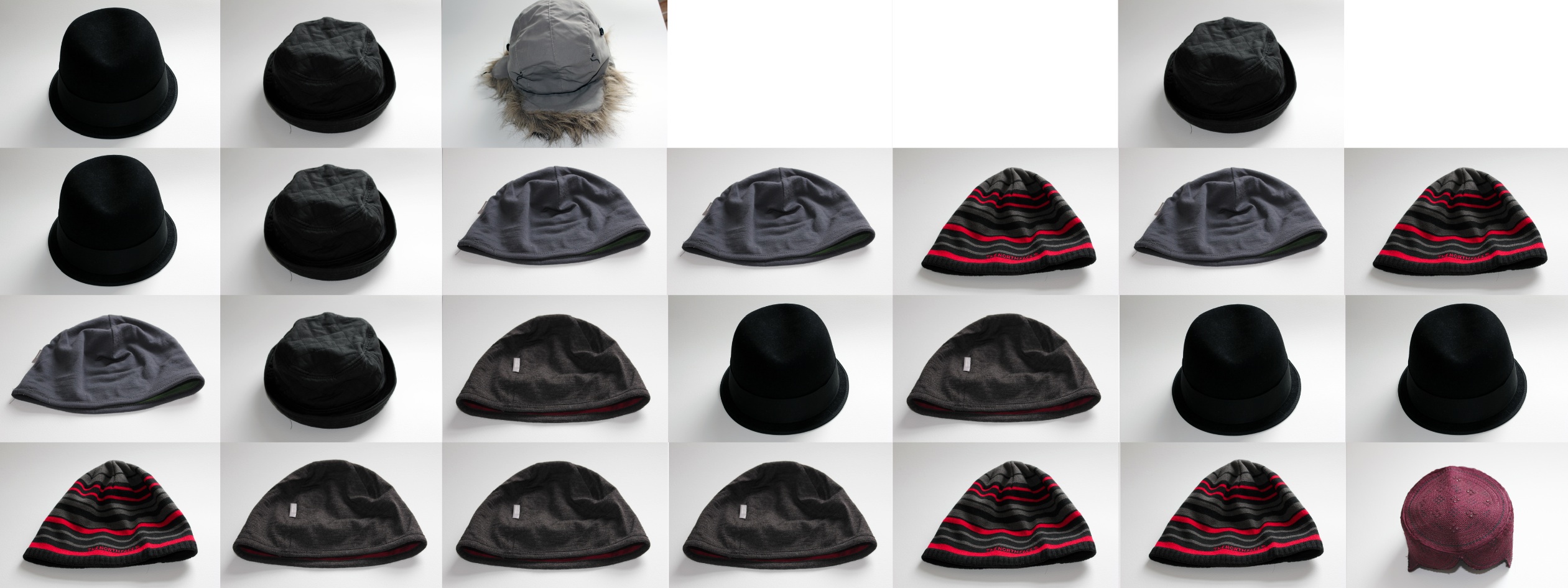
Hat analysis = remarkably well distributed.
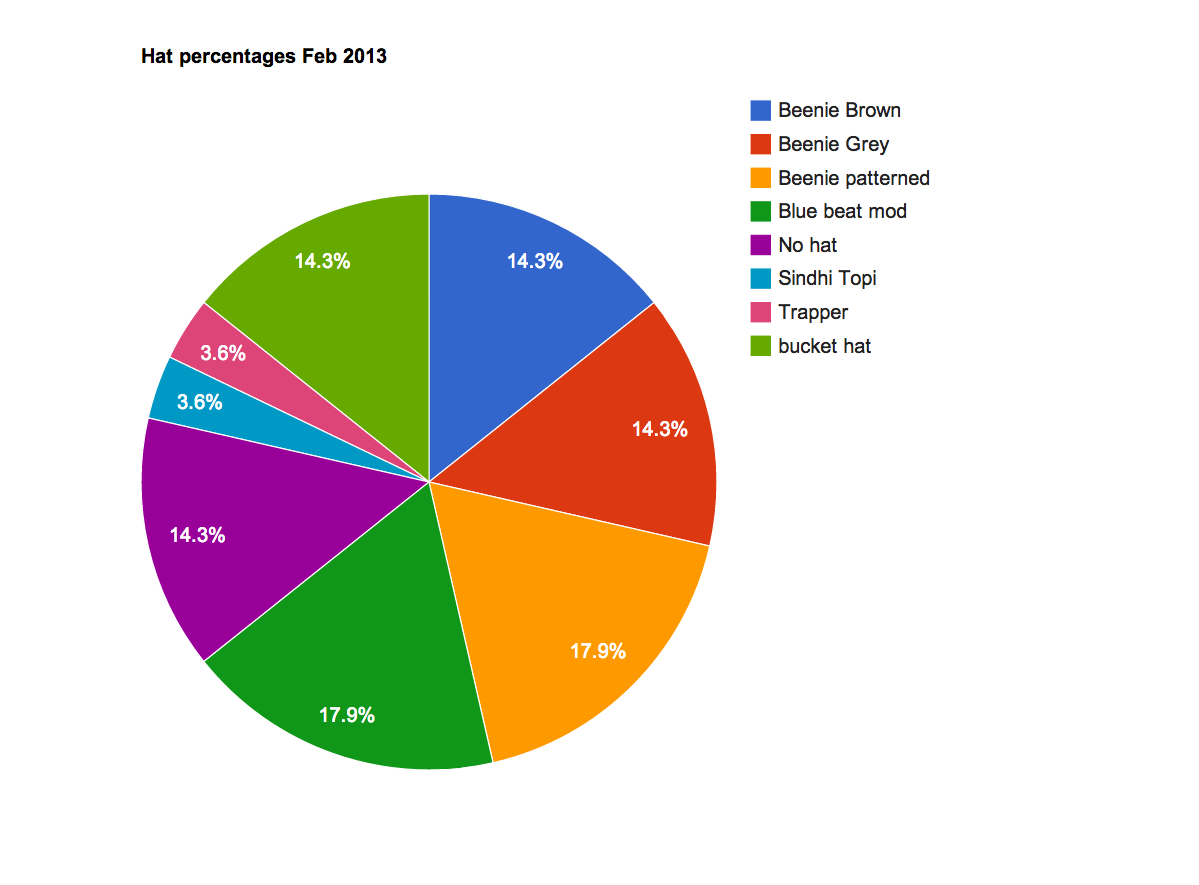 My favourite individual hat in terms of style being my Mod hat at 17.9%, followed by the bucket hat at 14.3 %. and ‘no hat’ the same. The beanie hats are cumulatively worn more than any other style, they are convenient more than anything and I wear them inside too.
What to ascertain from what I’m trademarking as the ‘pyschosartorial’ as a nod to pyschogeography? I’m surprised just how often I haven’t bothered to wear a hat at all, because my memory of this is that it was a rarer occurrence than actually the case. I’m wondering if it’s worth cross referencing the hat data to mood to see if there’s any correlation between the two in pyschosartorial terms. Something for the future. The Sindhi Topi was a recent addition so scores low on that count and is not a reflection on preference. More analysis needed here really, but something to watch out for.
Bloods and discomfort analysis
As mentioned previously, I’m only going to track medical and physical data as a cumulative charting.
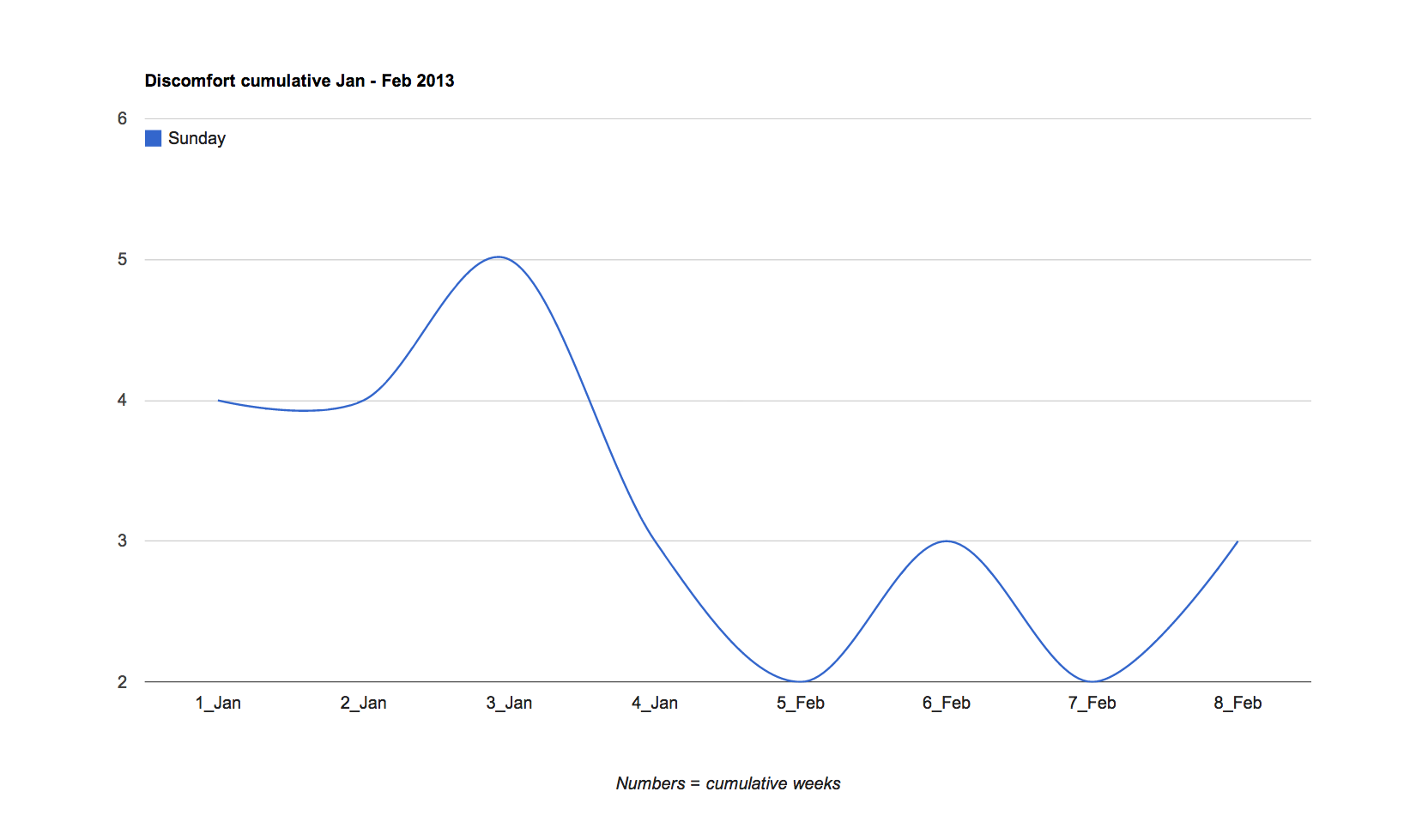
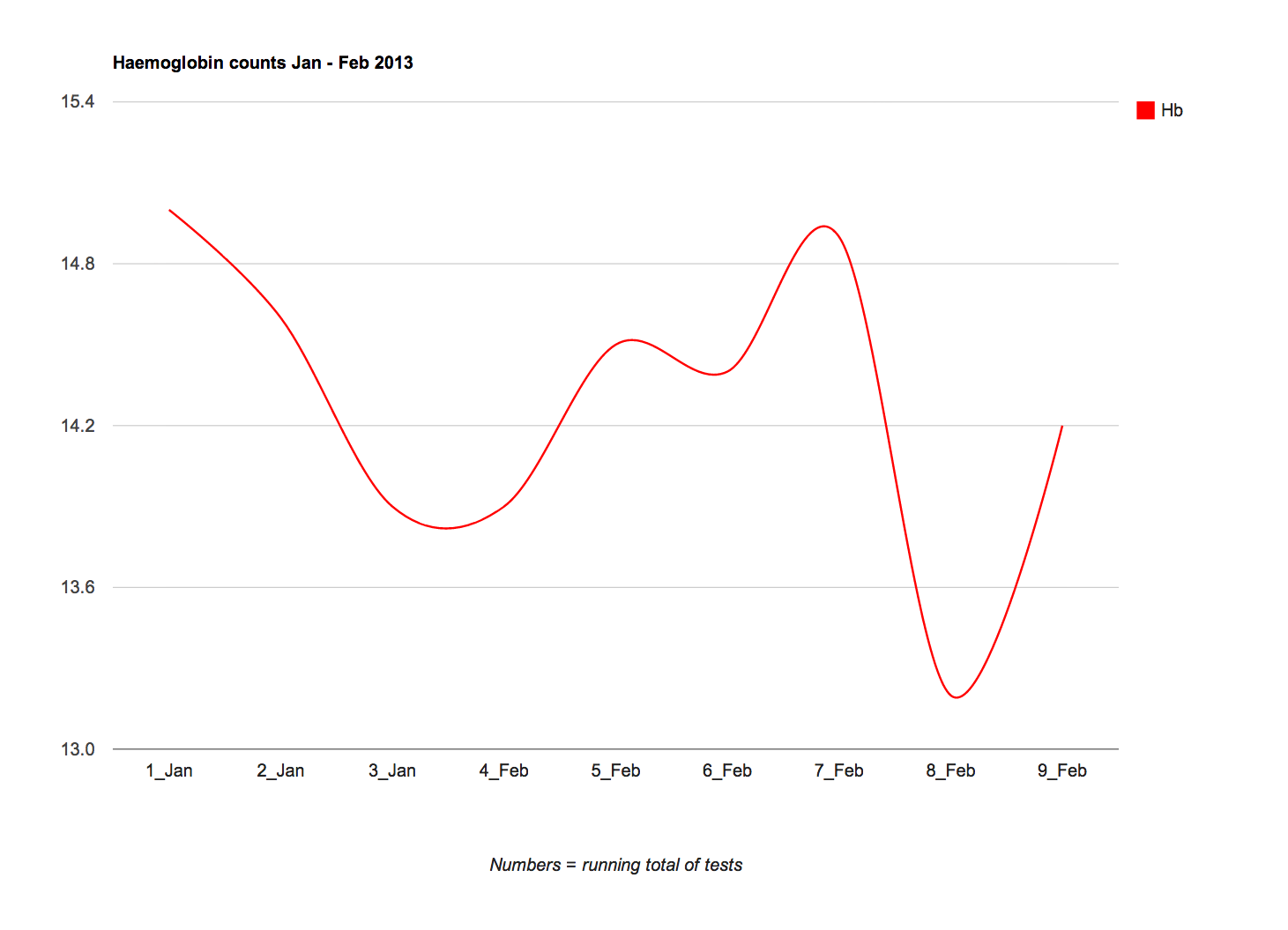
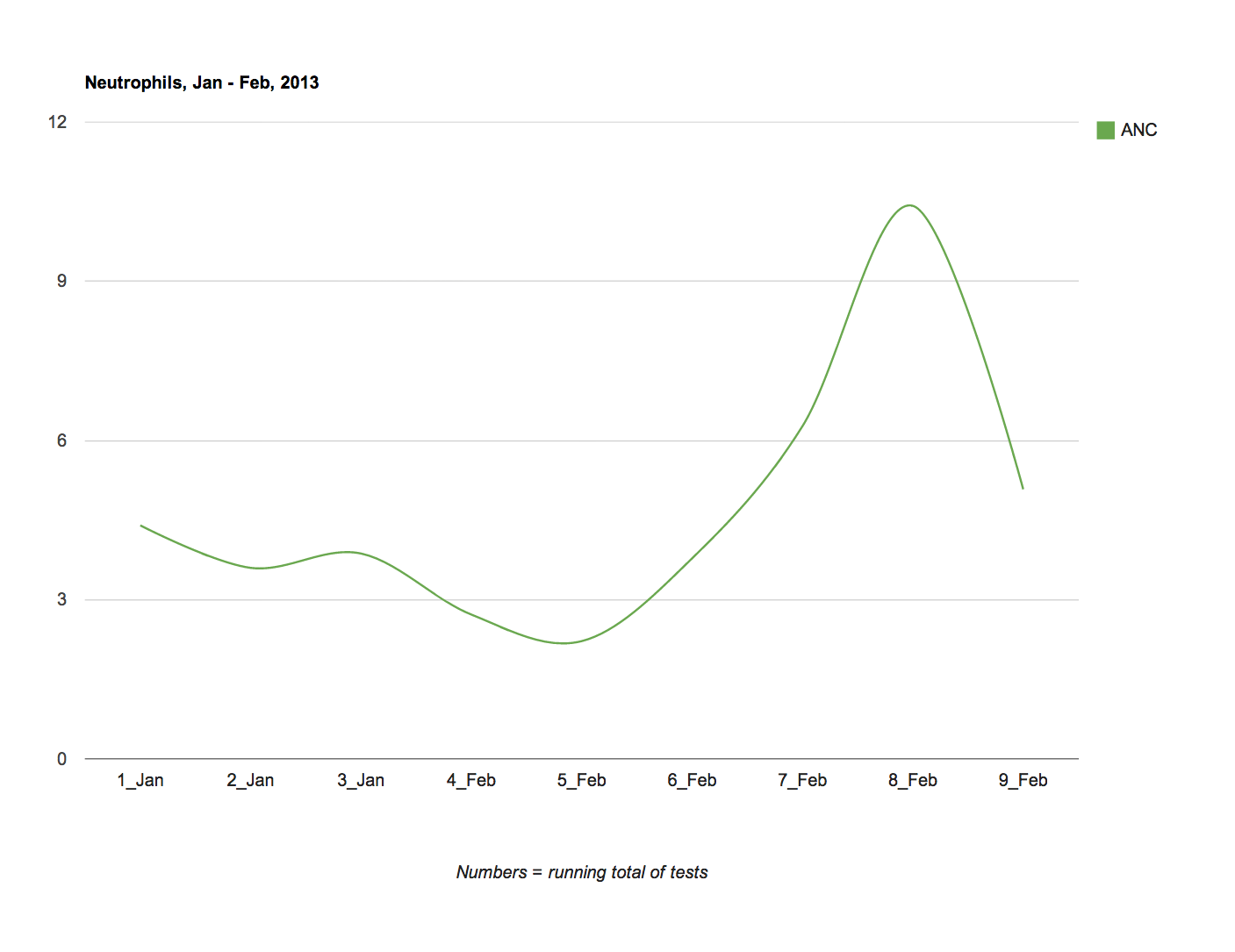
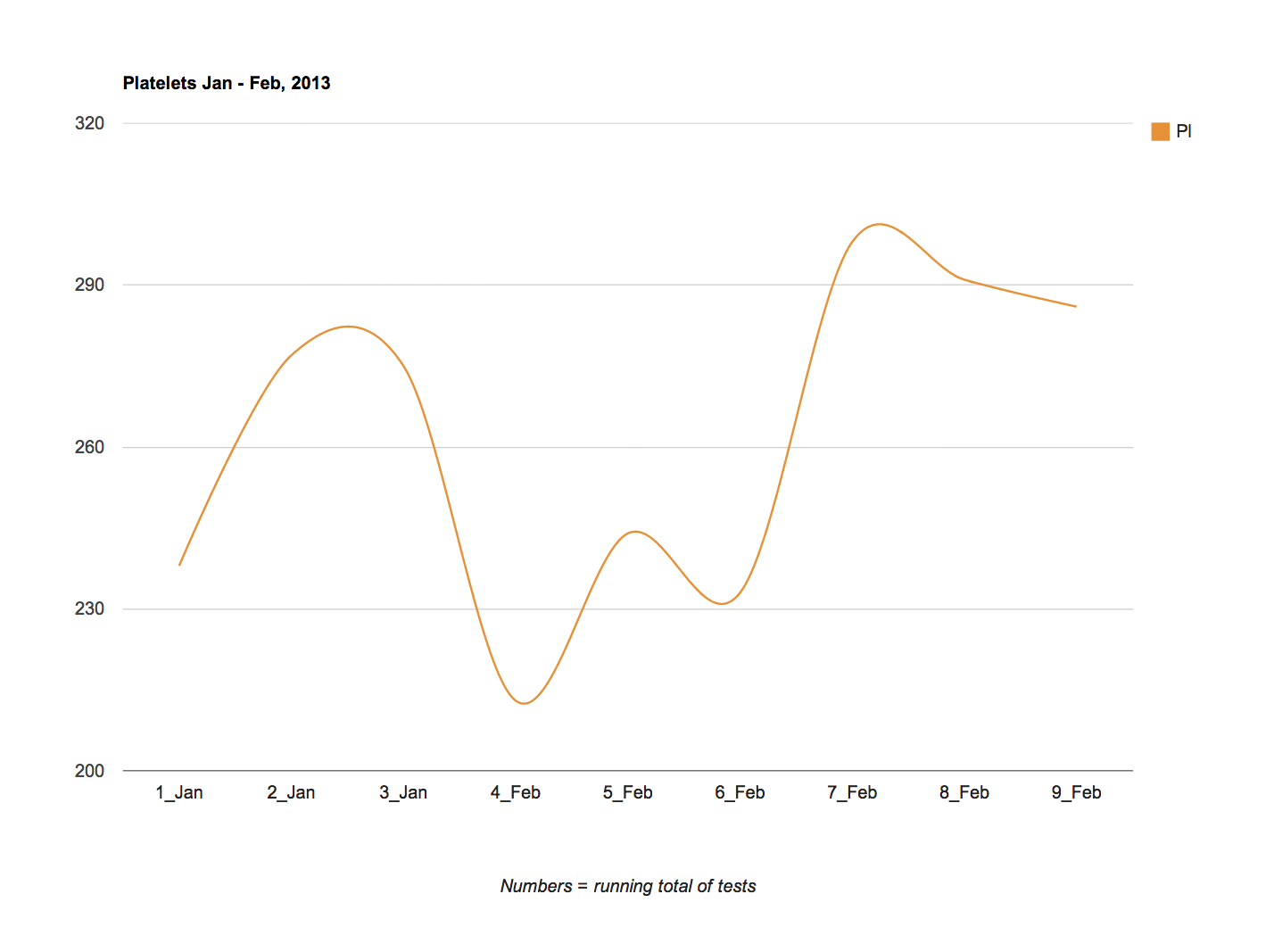
My bloods (Haemoglobin, White cell count, Neutrophils) all stayed within normal parameters, so despite the hammering the chemo was giving my immune system, it was coping quite well. The discomfort index was similarly stable mostly settling along the 2 – 3 range or mild. There was an up-kick early in the month to 5 (moderate) which coincided with a misunderstanding of a medical diagnosis which put me under enormous physical and psychological stress. Again there is future scope to merge some of this data with the affect information at some point.
For detailed description of parameters see the Data Methods part of this website
Haemoglobin: 13.7
White blood cells: 5.36
Platelets: 208
Neutrophils: 3.27
All in normal range.
Everything a bit downish though.
For detailed description of parameters see the Data Methods part of this website
Haemoglobin: 14.2
White blood cells: 7.12
Platelets: 286
Neutrophils: 05.08
All in normal range.
Neuts and platelets all down a bit
For detailed description of parameters see the Data Methods part of this website
Haemoglobin: 13.2
White blood cells: 11.39
Platelets: 291
Neutrophils: 10.42
All in normal range.
Neuts and up which is good.
My fist cycle of PAD finished last week and PAD cycle 2 started yesterday. A cycle is around a month so I’m into week 5 of the 8 weeks of treatment.
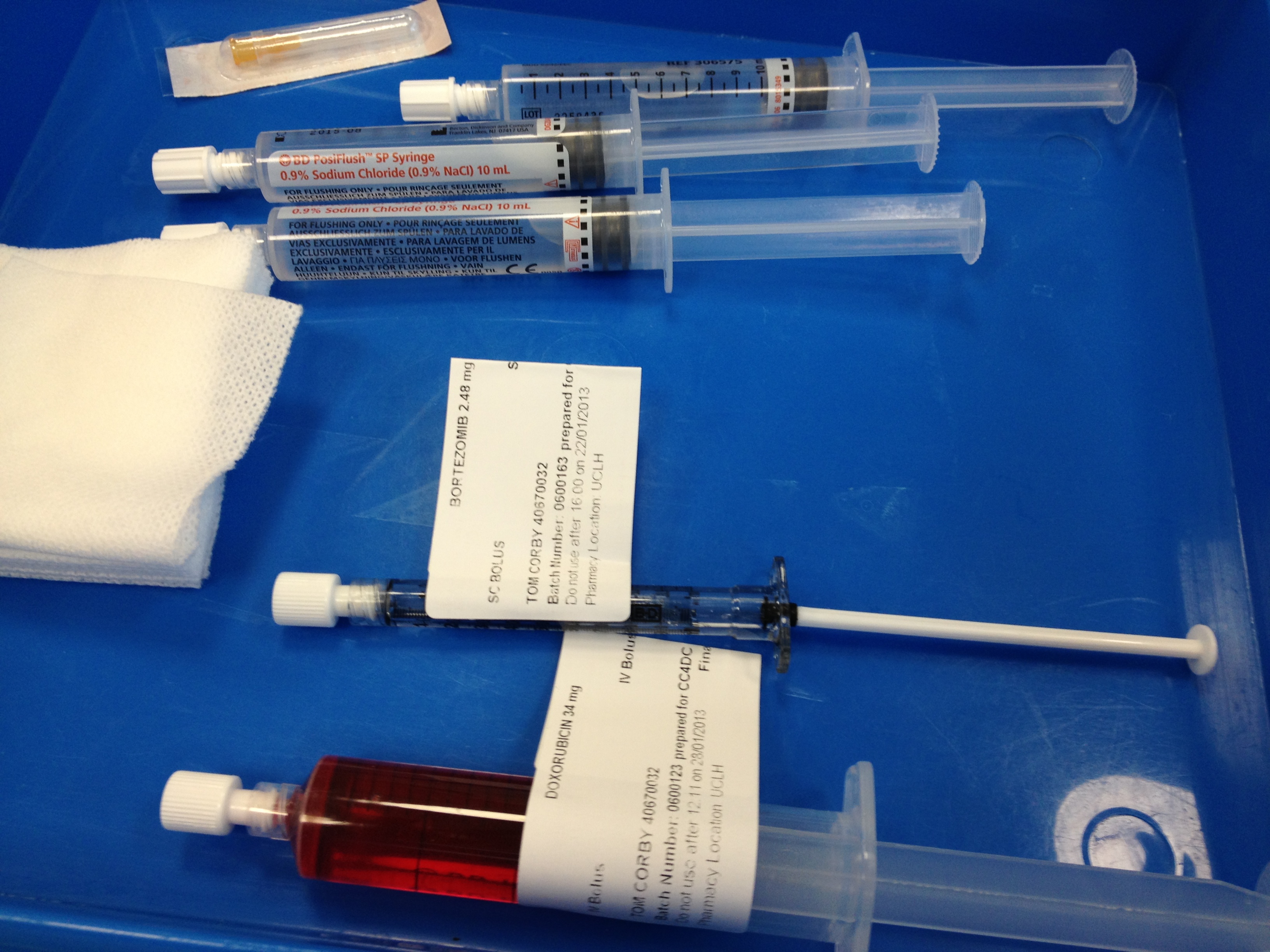
In cycle 1 I’ve had mild only mild side effects and apart from a bit of tiredness in the afternoons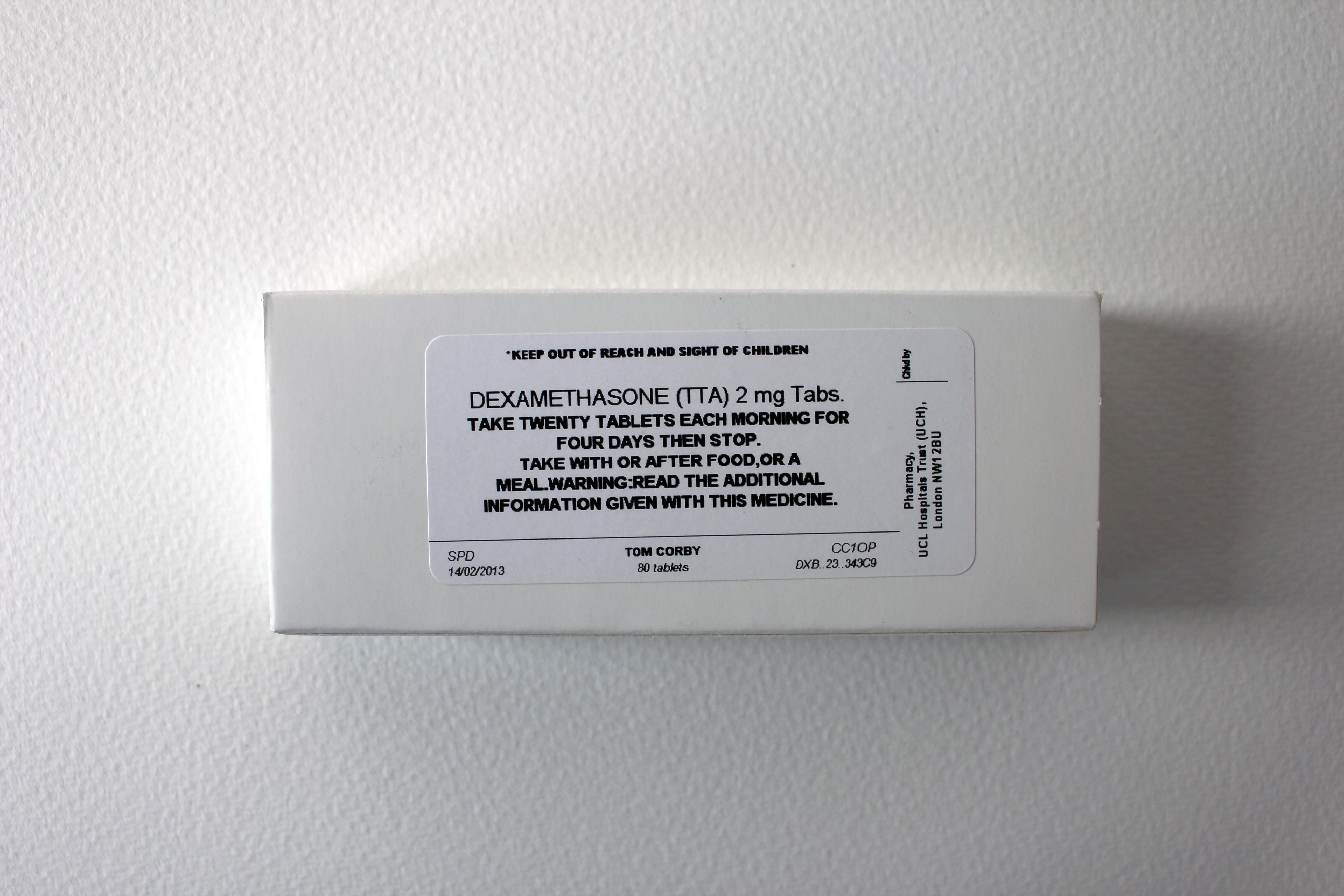 only mild passages of nausea and no actual sickness. I’ve had some mild neuropathy but noting dehabilitating. My hair has dropped like a Christmas tree’s needles on boxing day but I was expecting that.
Aside from afternoons, I’m or less working as normal.
For the uninitiated PAD is a treatment protocol consisting of 3 chemo and steroid drugs: adriamycin, velcade and dexamethasone. Dex is a steroid which I take in huge doses over the first few days of treatment. It turns you into a bit of a nutter by turns gregarious and hypersensitive (dex rage).
You don’t get much sleep.
Expect lots of late night posting.
For detailed description of parameters see the Data Methods part of this website
Haemoglobin: 14.9
White blood cells: 8.01
Platelets: 298
Neutrophils: 6.27
All in normal range.
Neuts and all other results up which is good.
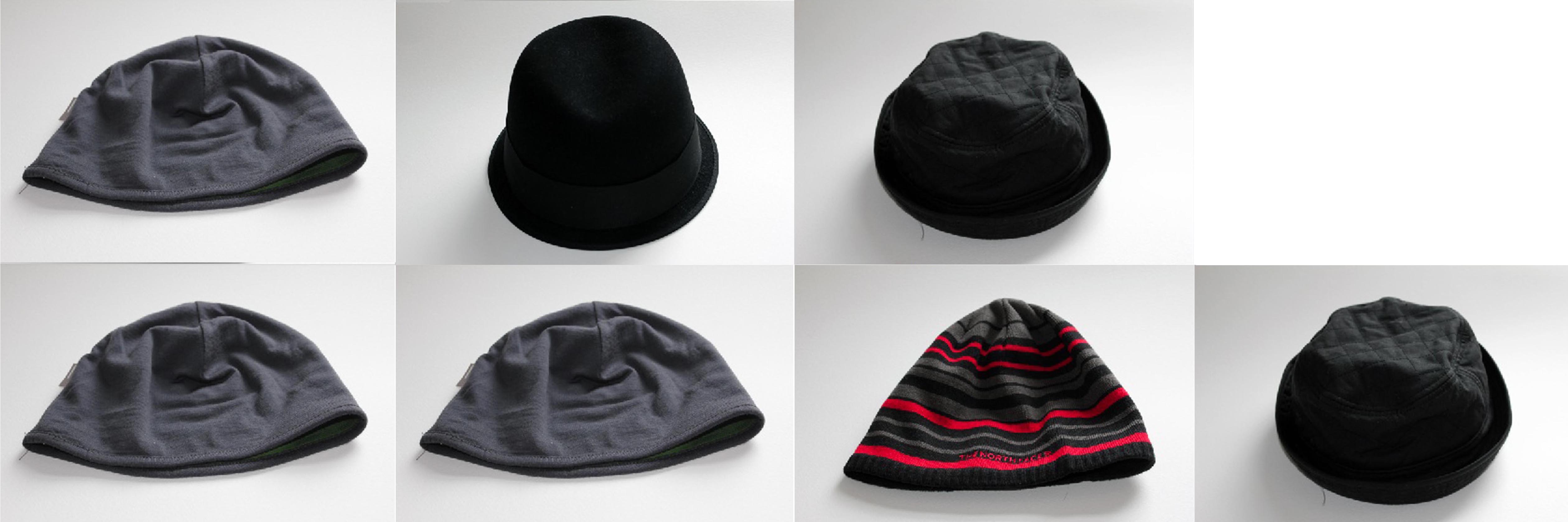
Weekly hats week ending Feb 17th 2013
This was an interesting week and the data gives a good representation of it’s peaks and troughs.
I have been in discussion to exhibit work arising from the project’s data. This made me feel full of energy and generally very creative and happy as can be seen in the highs of mood and stoicism mid-week (8 and 7 respectively). I’m not tracking creativity but if i was it would be an 8 out of 10. Ironically since my illness came back I’ve had more time to make work than before. Shame I had to develop incurable cancer to get into this position.
I have been working a lot on the project which has been great but by the end of the week I was beginning to feel tired and my back is sore, again reflected in the discomfort index which reached 4. This could be because I’ve been sitting down a lot and not getting as much exercise as I should, or it could be a symptom of the illness. I shall have to keep my eye on it.
The beginning of the week was challenging, my hair started coming out in clumps which initially was a bit of a shock (plunges in control and mood indexes). I’ve had what’s left shaved off and developed a hat index to account for the headgear I’ve adopted. I also developed a stoicism index to accompany the other mood and affect indexes.
I finished my first cycle of chemo which was a milestone and to which I have had only mild side effects, and I had an important meeting with my specialist where I got my paraprotein results which were good. No detectable levels (again reflected in higher mood, control and stoicism scores).
The scores on the doors
For the key to these please look at the Data Methods part of this site
Hats: (Beenie grey x 3, Bucket hat x 2, Blue note Mod x 1, Patterned beenie x 1)
Stoicism: a low of 4 (Stiff upper lip) and a high of 7 (I feel fine), mostly 4-5 (stiff upper lip)
Mood: a low of 5 (subdued) and a high of 8 (cheerful and in good spirits), mostly 6 (calm) and 7-8 (cheerful and in good spirits)
Control: a low of 3-4 (little control) and a high of 7 (a good deal of control), mostly 5 (some control ),
Discomfort: a low of 2 (mild) and a high of 4 (moderate). Mostly 4 (moderate)
 My bloods (Haemoglobin, White cell count, Platelets, Neutrophiils) all stayed stable and in the normal range.
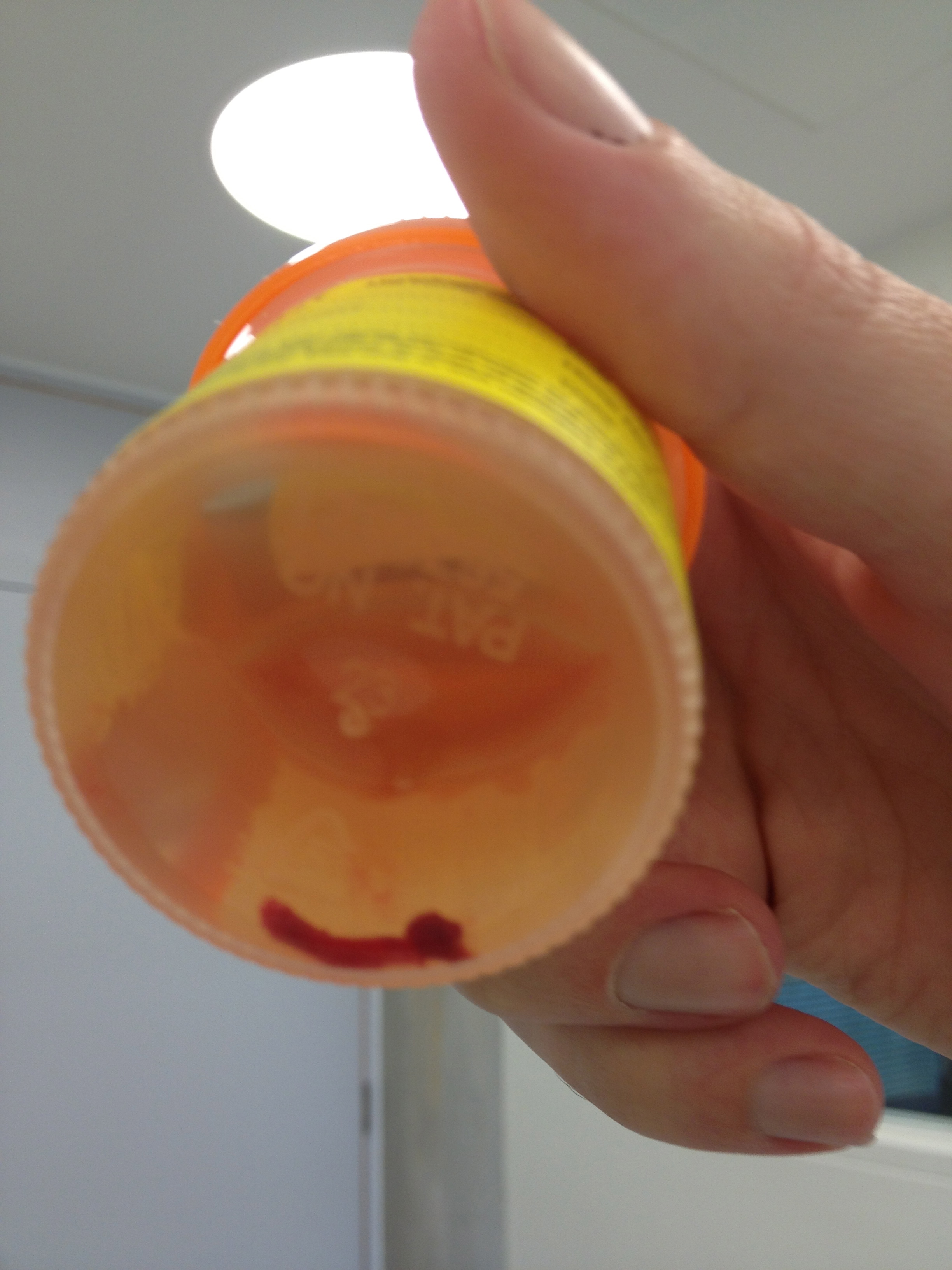
I had the results back from my bone marrow biopsy (image left) and Bence Jones Urine tests, no detectable levels of Paraprotein.
I consumed a total of £771.45 worth of drugs which included chemo and antibiotics.
Thank God for the NHS
Recently I came across a project by Salvatore Iaconesi whose The Cure website has open sourced all the clinical data from his brain tumour with the aim increasing his chances of survival and contributing data to the international research community. It’s a magnificent project that has already had an impact on debates around the role of the patient and data in cancer treatment. I very much see blood and bones as connected to this vision in terms of putting the patient in control of their data and enabling wider uses of it. There are divergences of approach, my project is less resolutely about open-source politics, I don’t think it will contribute to a cure, although it may contribute understanding to the ecologies of treatment that patients, diseases and medics are entangled in. I also feel blood and bones is a more traditional (if I can use that word) aesthetic project concerned with the collision of the bureaucratic and the personal, the material and the informational, in a way that draws upon conceptual traditions in the arts and wider digital culture.
Please visit his great project:
Paraprotein = 0
No detectable level after bone marrow test and bence jones urine test. Good.
 blood and bones